Our Research and Vision
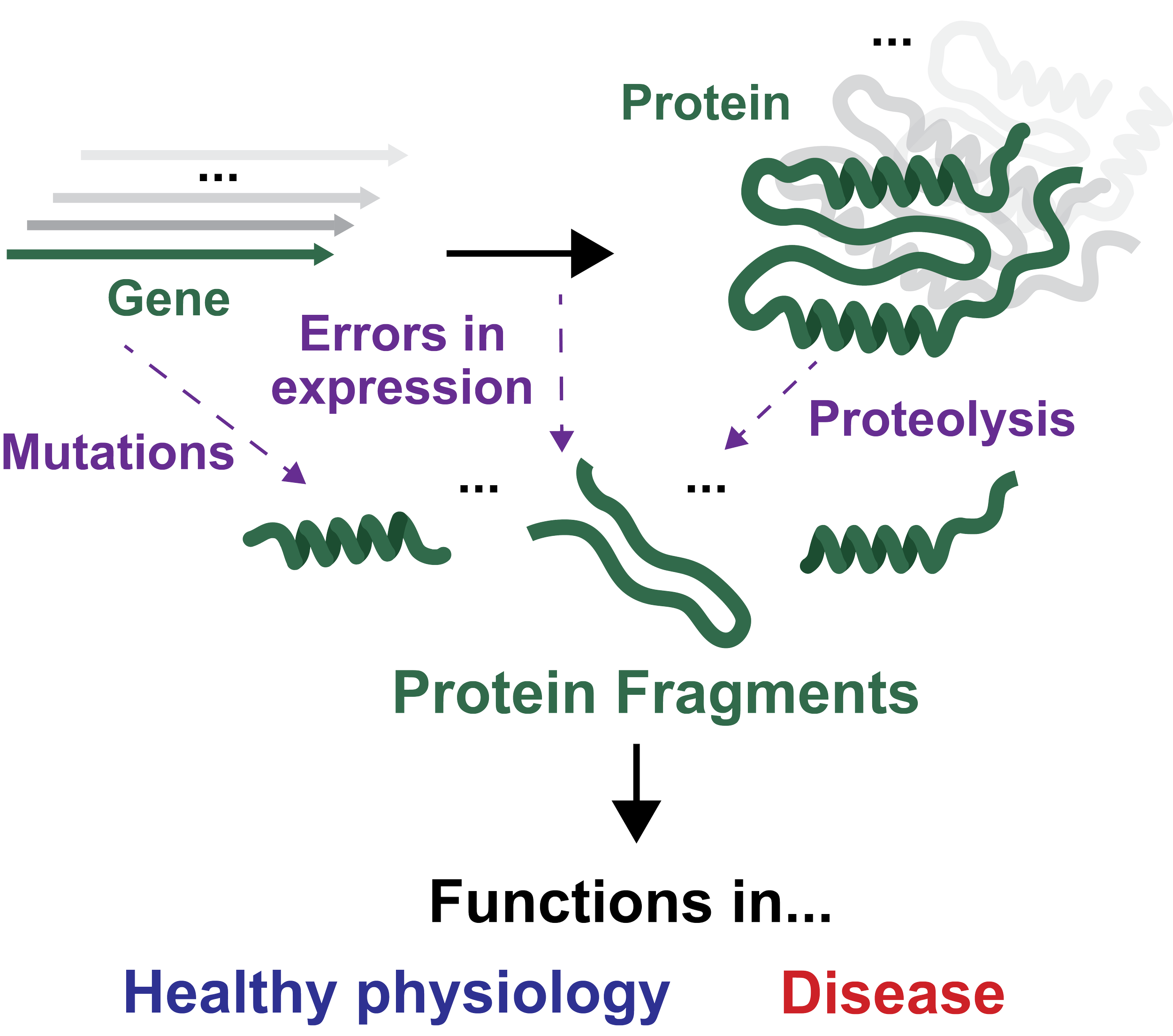
All cells produce protein fragments. These incomplete versions of cellular proteins arise by a variety of mechanisms, including proteolysis, errors in gene expression, and mutations at the DNA level. Such fragments have inherent potential to act as inhibitors of protein interactions by mimicking native interfaces (dominant negative activity), or to provide novel functions by lacking key regulatory domains. Organisms across the tree of life have also evolved multiple quality control mechanisms to suppress protein fragments, suggesting they can pose a problem for cells; indeed, 10-15% of human diseases are associated with mutations encoding incomplete proteins.
However, this idea – and more broadly, the functional potential of protein fragments – had until recently not been tested systematically, in part due to a lack of enabling technologies.
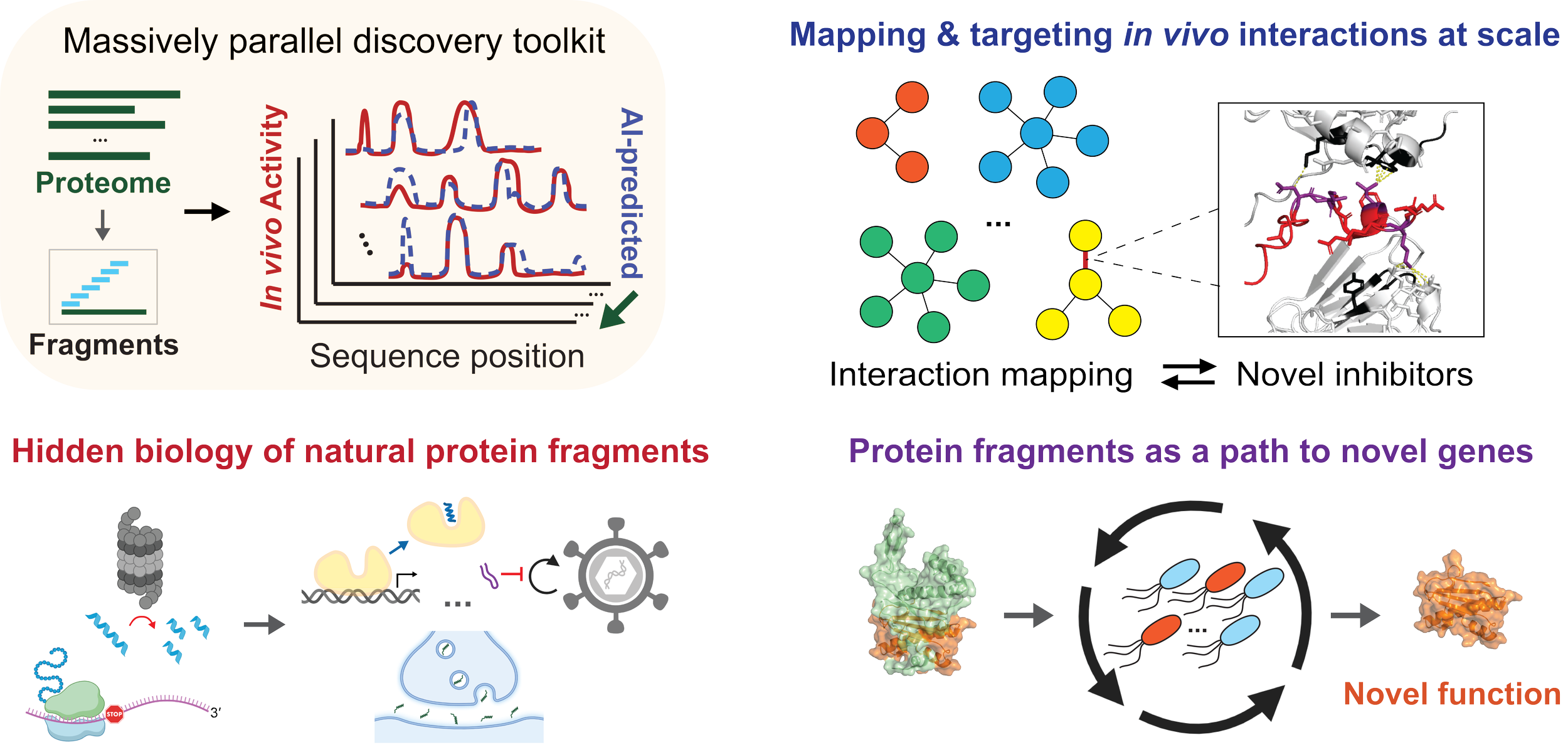
To address these questions, we have developed powerful new methods to discover functional protein fragments on a massively parallel scale, combining high-throughput in vivo measurements and AI/ML. Leveraging these approaches across structurally and functionally diverse proteins, we have demonstrated that small protein fragments are pervasively functional and titrate key protein interactions in vivo. Fragments are therefore universal regulators of protein function, with profound implications for understanding and controlling biology.
Pursuing these implications, we have leveraged protein fragments across diverse systems — including to design de novo antimicrobials and control biomolecular condensates involved in driving neurodegeneration, viral infection, and cancer.
We are actively working to uncover the far-reaching consequences of protein fragments in health and disease.
Directions include:
(1) Mapping protein interaction pathways in living cells at scale, and engineering potent inhibitory fragments to control these pathways.
(2) Unveiling the hidden biology of protein fragments that arise in cells naturally.
(3) Decoding how protein fragments evolve at the DNA level, contributing to both biological innovation and molecular dysfunction.